HHAHS EST. 1977 Hanover-Horton Area Historical Society
Explore

History beyond the museum walls

Heritage Park carries the HHAHS story across 82 acres purchased in 2002: wooded hiking trails, gardens, historical demonstration buildings, a working crop farm and the HHAHS Event Center — a place where rural heritage is lived rather than displayed.

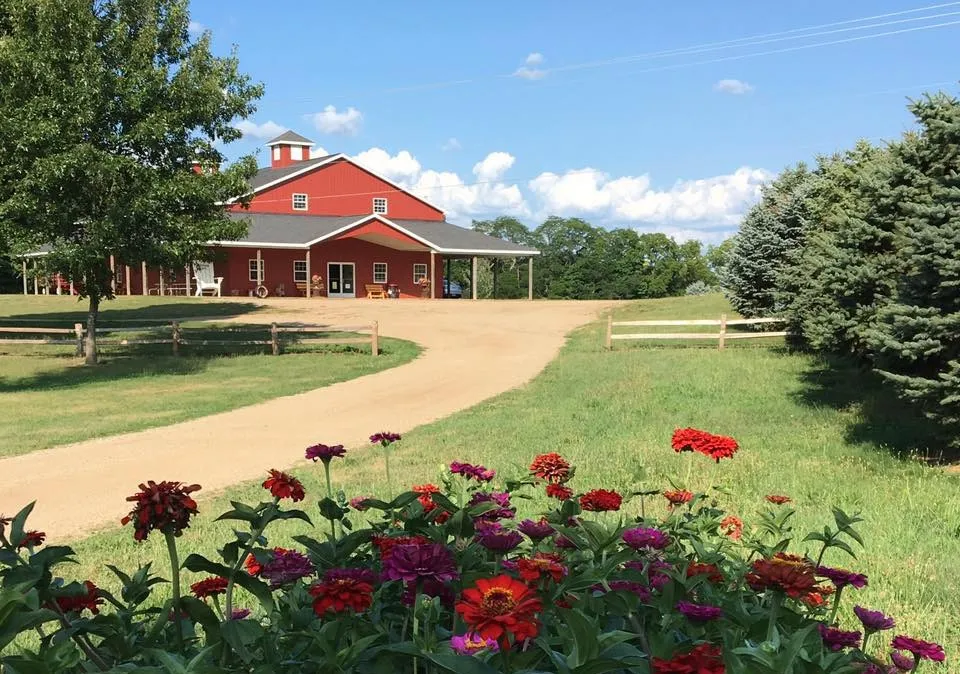
The red HHAHS Event Center at Heritage Park, with zinnias blooming in the foreground
01 What you will find

A landscape that still works the way it used to.

The society purchased this acreage, adjacent to the museum, in 2002. It gathers the outdoor side of Hanover-Horton heritage in one place — room to walk, history to encounter, and ground that is still farmed. The park grounds are always open.

01

Meg’s Woods and the gardens

Groomed hiking trails wind through Meg’s Woods among native wildflowers, and the local garden club maintains a perennial garden on the grounds.

02

Historical demonstration buildings

The Antique Farm Equipment Barn, a pioneer homestead with a log cabin, an old-fashioned sawmill, an operating Sugar Shack and the Kids on the Farm Barn, with hands-on experiences for children — along with the Herrick Building, where restoration volunteers hold their organ workshops.

03

A working crop farm

Not a diorama. Part of Heritage Park is planted and tended season after season, with an annual harvest and the fall corn maze keeping the area’s farming heritage alive in the most literal way there is.

04

The Event Center

The park’s gathering place for the society’s annual events and community celebrations — and available to rent for your own.

02 How the park began

Bought by the community, built by volunteers.

In 2000, Ken Reed and friends came to the society with a bold proposal. Eighty-two acres of farmland next to the museum had recently been listed for sale, and they wanted to hold a community fund-raising drive to raise the $180,000 needed to buy it.

The landowner cooperated, allowing two years to raise the money. The goal was met and the land was purchased. The tract was named Heritage Park and dedicated in 2002.

  • 82 acres of farmland next to the museum
  • $180,000 raised in a community fund-raising drive
  • 2 years the landowner allowed to raise the funds
  • 2002 the year the land was named Heritage Park and dedicated

What volunteers have added

Almost immediately the society began holding events in the park, and a dedicated group of volunteers began making improvements. These are the major additions.

  • A network of internal gravel roads
  • An electrical power distribution network
  • A large nature and hiking trail
    Meg’s Nature Trail
  • A tractor pulling track Developed for use with the Rust ’N Dust event.
    The pulling track
  • A 5,000 sq. ft. Event Center With meeting rooms, restrooms and a kitchen.
    Rent the Event Center
  • A working sawmill and planer Early 20th-century vintage machinery.
    The 1900 sawmill
  • A storage building
  • An operating Sugar Shack For refining raw maple sap into maple syrup.
    The Sugar Shack
03 Feature by feature

Four parts of the park, up close.

The sawmill, the Sugar Shack, the pulling track and the nature trail are among the major additions volunteers have made. Here is each one in detail.

Working exhibit

The 1900 sawmill

An early-1900s mill, donated in 2008 and made operational by volunteers in 2009.

This is a Geiser sawmill built by the Emerson-Brantingham Company of Waynesboro, Pennsylvania, in the early 1900s. It is fully operational, and the sights and sounds of it running recall the era when Michigan’s lumber industry was in its prime.

To complete the exhibit, a vintage planer and a drying shed for the sawn lumber were added. The dried lumber is used for projects at the park, such as the Sugar Shack.

How it got here

  1. 2008 John and Lina Pardee of Concord, Michigan, donated the sawmill to the park.
  2. 2009 Restored by many volunteers, the mill was made operational.
  3. 2010 The pavilion was added.

The sawmill is one of the attractions listed for Rust ’N Dust.

See upcoming events

The machinery

MakerEmerson-Brantingham Company of Waynesboro, Pennsylvania
BuiltEarly 1900s
DriveDual friction carriage drive on the husk
Blade46 inches in diameter, with the saw arbor riding on Babbitt bearings
Carriage12 feet long with three knee blocks, made by the A.B. Farquhar Company of York, Pennsylvania
RailThe carriage travels on 45 feet of steel rail
Maple syrup

The Sugar Shack

An authentic working maple sugar shack, operated solely with volunteer help. All proceeds from the syrup go to the society.

The project began in 2013, when a member donated old parts from a sugar shack that had been used in his family for more than 50 years. Some of the equipment was more than 120 years old.

Working from a University of Vermont building plan, many volunteers built the shack with wood cut from society members’ land and sawn on the park’s own antique sawmill. They used old-fashioned methods, with mortise-and-tenon joints put together with wood pins, and the weeks of work were something like a barn raising. Members donated the time and the money.

In the first two years after it was completed, the shack produced more than 200 gallons of syrup.

There is always a need for more help, and visitors are welcome at the shack any day the sap is flowing. The Maple Syrup Festival Pancake Breakfast is held in March.

Volunteer with the society

How a sap run works

  1. The weather turns Winter days grow longer. For several days in a row, daytime temperatures are in the 40-degree range and nighttime temperatures in the 20-degree range.
  2. The sap begins to flow Volunteers spend hours collecting it.
  3. The fire is kept burning The raw sap is refined into maple syrup, with volunteers keeping the fire going and sitting around the shack telling stories.
  4. The season runs its course The whole process takes from three to eight weeks.
Tractor pulls

The pulling track

Developed for the tractor pulls at Rust ’N Dust, where the winner of each division provides the donuts.

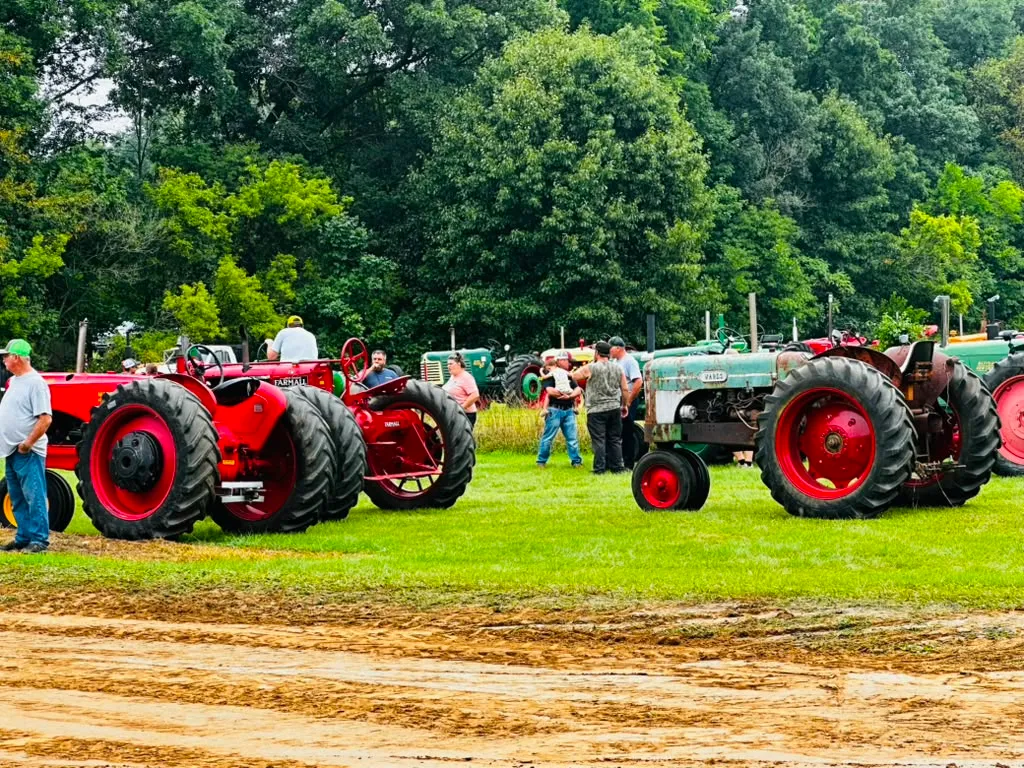
Red and green antique tractors parked on the grass beside the dirt pulling track, with people standing among them
Beside the track at the 2026 Rust ’N Dust show.

Tractor pulls grew out of the days when farmers competed with their teams of horses to settle whose team was best. It was a gentlemen’s competition, and the winner gained only bragging rights. As tractors replaced horses on the farm, the tradition carried on with tractors.

A tractor pull was part of the original Old Tractor Show. When the society began sponsoring Rust ’N Dust, the pulls continued with a dead-weight sled. The first year was run on a makeshift track, but by the second year at Heritage Park the track had been refitted with an appropriate surface. A loudspeaker system and an announcer joined the event.

In 2013 substantial improvements were made to the track through a generous donation in memory of Edwin Spink.

How the pulls work

Tractors
Farm stock, built before 1960
Turnout
Typically more than 100 tractors each year
Travel
Participants come from as far away as Ohio and Indiana
Sled
The pulls are held with a progressive sled
Entry
There is an entry fee
Prize
The winner of each division gets bragging rights, and the obligation to provide donuts for the vanquished

For the complete rules, call the society office at 517-563-8927 (Tuesday–Friday, 9:00 a.m.–12:00 p.m.).

Woods and gardens

Meg’s Nature Trail

The park’s woodland path, open to walk any day.

Meg’s Nature Trail is a well-maintained walkway through the woods, with many benches along the way. The Hanover-Horton Garden Club has planted native wildflowers to add to those already growing there, and the society has planted redbud trees. The hope is for a display of color along the trail each spring.

The Garden Club also maintains the perennial gardens on the society’s property.

Along the trail

Wildflowers
Thousands of native wildflowers, planted by the Hanover-Horton Garden Club to add to those already there
Redbuds
100 redbud trees, planted by the society in 2015
Benches
Many benches along the way

Come for

  • Bird watching
  • Wildflowers
  • Photography
  • Solitude
04 Community events
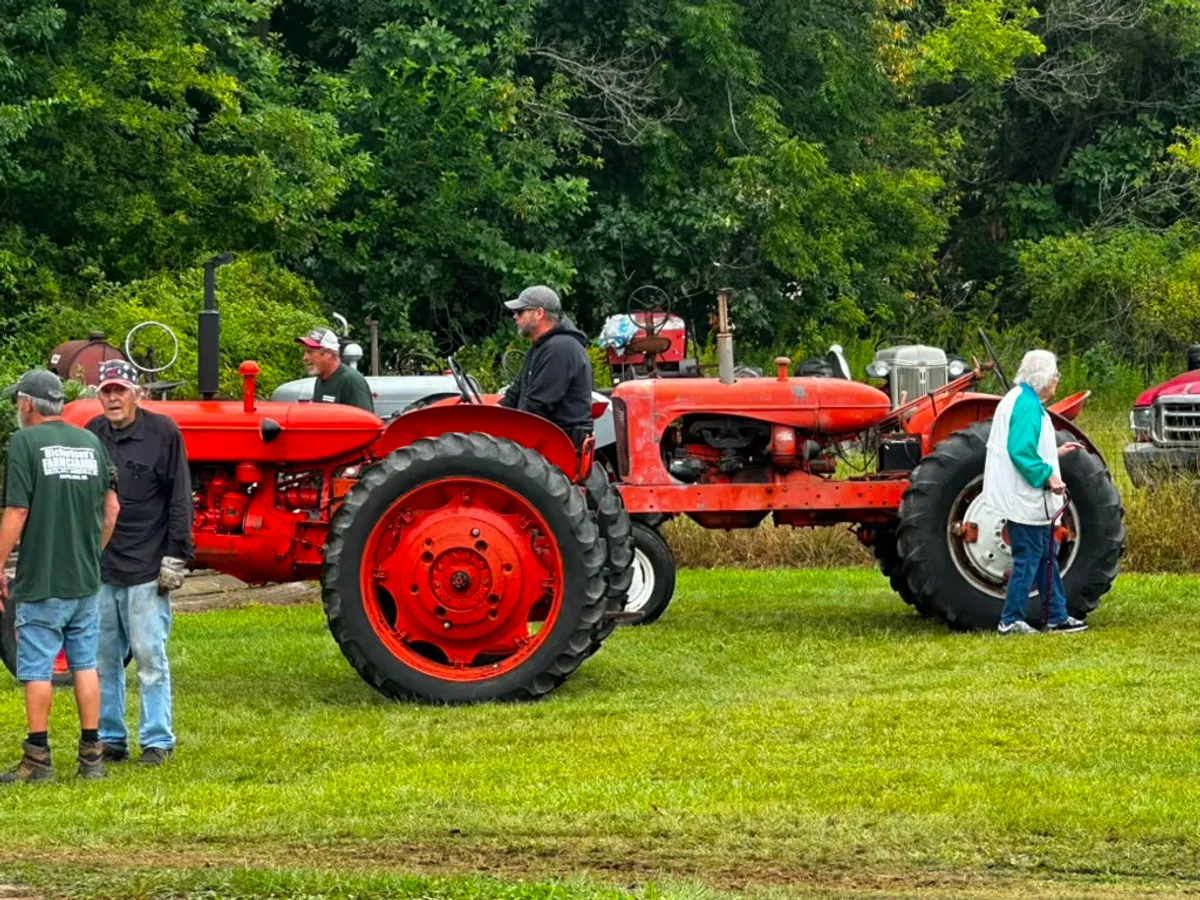
Visitors among orange Allis-Chalmers tractors on the grass at the 2026 Rust ’N Dust show

The park comes alive when people gather.

Through the year, society gatherings, demonstrations and community traditions bring Heritage Park into use — tractors and tools out in the open, tables set, neighbors talking.

An event day is one of the best ways to experience the park itself, and the calendar lists what is scheduled and where each gathering meets.

See upcoming events

Shared with the community

Several events the society does not sponsor also take place at Heritage Park, in collaboration with other area organizations. Here are some examples, along with two ways area young people make use of the society’s projects and trail.

  • Parade lineups

    The Hanover 4th of July Parade, the Antique Tractor Club’s Tractor Caravan and the high school’s Homecoming Parade stage their lineups in the park’s parking area each year.

  • Meetings and large events

    The Lions Club meets in the Event Center, and the library uses the facility when it hosts large events.

  • Cross-country meets

    The Hanover-Horton High School cross-country team has used the park for its meets.

  • Scout camporee

    In 2004 a Boy Scouts council held its Spring Camporee in the Meg’s Woods section of the park.

  • Community service

    The society offers many varied projects that area young people can use to fulfill their community-service requirements.

  • An outdoor classroom

    On a fine spring day you may come upon a class of elementary students sitting along Meg’s Trail, working on a writing assignment.

05 Rentals

Rent the Event Center.

Set among the fields and trails of Heritage Park, the HHAHS Event Center hosts receptions, reunions, meetings, celebrations and community gatherings.

Renting it also supports the preservation work directly: every booking helps care for the collection, the buildings and the grounds. Availability, sizing and rates come from the office.

See rental information

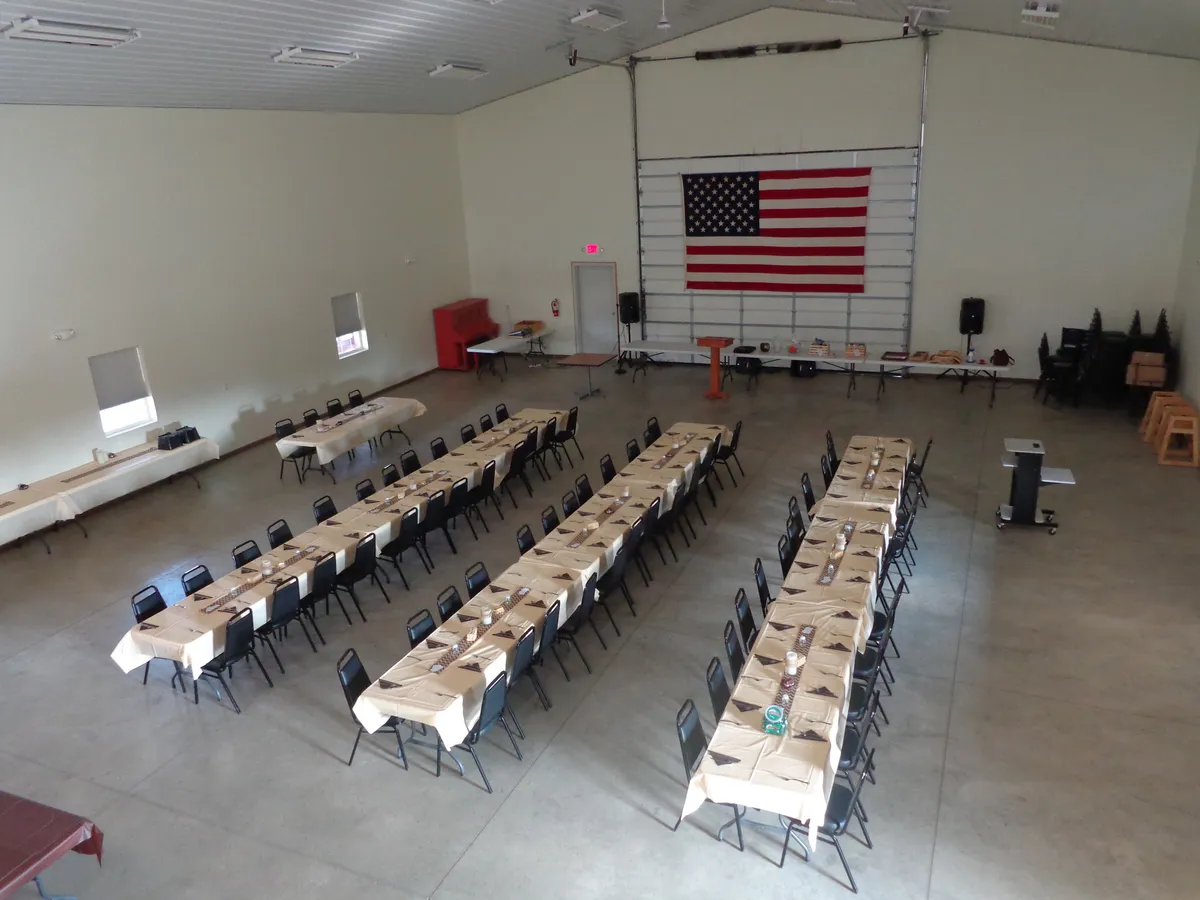
The Event Center interior set with long tables for a banquet
06 Planning ahead

Planning to see the park?

The grounds are always open, so the trails and gardens can be walked any day. To see the buildings in use, come to a scheduled event or contact the office first. Our volunteers are glad to help you plan, and they will know what is happening on the grounds that week.

Office hours
Tuesday–Friday, 9:00 a.m.–12:00 p.m.
Tours
By appointment, year round

Make Heritage Park part of your plans.

Walk the grounds any day, come for an event, or book the Event Center for a celebration of your own.