Keeping the music alive
Antique reed organs need specialized knowledge, patient craftsmanship and steady care. HHAHS restoration volunteers keep the collection playable — and they like showing people how it is done.
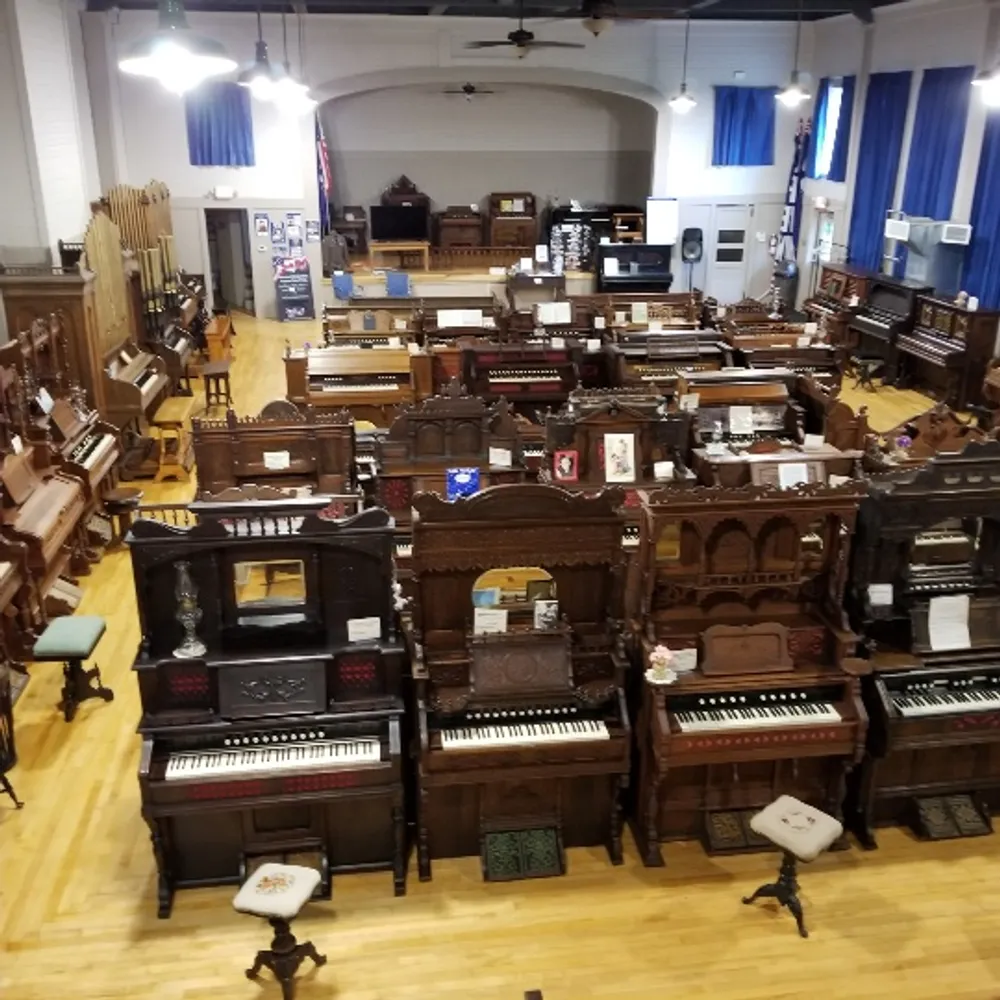
Patience, measured in decades.
Every playable organ in the Conklin collection stays that way because someone gives it careful, skilled attention. Volunteers inspect, maintain, repair and demonstrate instruments from the collection, and pass the practical knowledge along to anyone who wants to help.
It is slow, satisfying work: freeing a sticking key, coaxing a reed back into tune, mending bellows so an instrument can breathe again. Small repairs, made with care and repeated over years, are what keep history playable.
In October 2019 the society hosted the Reed Organ Society’s international gathering — a fair measure of both the collection and the expertise that looks after it.
Four things every restorer learns.
Workshops show how the parts of a reed organ work together, and what it takes to bring one back to playable condition.
Bellows
The instrument’s lungs. Foot-pumped bellows move the air that makes every note possible, and after a century their leather and cloth need careful renewal.
Reeds
Thin tongues of brass, one for every note. Each is cleaned, seated and tuned until the instrument speaks clearly again.
Pedals & action
Pedals, keys, stops and linkages connect the player to the sound. Worn felt and sticking keys yield to patient adjustment.
Woodwork
Ornate cases, carved details and original finishes, repaired and preserved with respect for the maker’s hand.
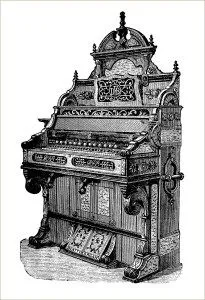
See the craft up close.
Restoration volunteers hold regular repair clinics to keep the collection’s organs playable — and open the doors so others can watch, ask questions and learn. Sessions meet at the Herrick Building at Heritage Park, next to the museum.
The workshops are led by experienced reed organ restorers from Ohio and Michigan. The team is a mix of experienced workers and learners, and volunteers are always welcome.
No experience is needed, whether you own a reed organ, want to understand the craft, or are thinking about joining the restoration team.
- When
- One weekend a month
- Season
- March through October
- Hours
- Friday and Saturday, 9:00 a.m. to 5:00 p.m.
- Where
- The Herrick Building, next to the museum
What a workshop weekend involves
Approximately 45 organs are in the workshop, in need of various repairs.
The team works on several organs at a time, depending on who comes to that session.
Typical work
- Repairing bellows
- Replacing valve faces
- Tuning
- Cleaning
- Basic case restoration
Who can come
Anyone with an interest in reed organ restoration is welcome to come and learn by doing.
- Cost
- $10 per day. Society members attend free.
- Your time
- You do not have to come both days or stay all day.
On video Volunteers restore organs at the Conklin Reed Organ Museum (opens in a new tab) on YouTube.
Have a reed organ in the family?
Questions about your own instrument are welcome — how it works, how to care for it, what a restoration would involve. Contact the office first and we will connect you with the right restoration volunteer.
We do not offer appraisals or valuations, and we cannot tell you what an instrument is worth. What we can offer is a conversation with someone who has taken a hundred of them apart.
Please get in touch before bringing an instrument or parts to the museum. A short conversation ahead of time makes sure the right people are on hand.
Learn the craft firsthand.
Restoration runs on volunteer hands and curious minds. Learn the craft, ask about an instrument, or lend your time — every bit of care keeps another organ singing.